Showing posts with label jewelry facts. Show all posts

Sunday, September 24, 2017

Diamond Facts

Tell Me More, Tell Me More!


Diamonds. Nothing is harder, nothing is sparklier and nothing -thanks to a nifty, mid-20th century advertising campaign - symbolizes love better. The ancient Greeks had a wordfor it, adamas - "invincible."

-via InStore Magazine

Saturday, March 1, 2014

Gemstone Facts: Aquamarine

Tell Me More, Tell Me More!


"Aquamarine- the sea in rock form. Most older Americans remember only lightly saturated aqua or the more common synthetic spinel substitute offered by stores through the 20th century. But in the last 10 years we have been blessed with new finds in places such as Madagascar, which has produced stunning, saturated aqua and the unheated, more natural sea-foam color that all the leading edge jewelers are now seeking." -Jim Fiebig, via InStore Magazine

Friday, November 1, 2013

Gemstone Facts

Citrine, November's Birthstone


Qualities: Like amethyst, citrine is a variety of the mineral quartz. Most gemstones, including diamond, need enhancement through cutting or treatment to be enjoyed in a piece of jewelry. Citrine is frequently heated to permanently coax out it's fiery gold color.

Care: Prized for its beauty, affordability and durability, citrine is an excellent choice for everyday wear.

It's color is associated with lightheartedness and cheerfulness.

-via American Gem Trade Association

Wednesday, August 14, 2013

Jewelry Facts: Platinum

All About Platinum with GIA
Take a moment to learn a bit more about platinum with The Gemological Institute if America. You might be surprised with what you learn about this popular material.

"Jewelers often select platinum for heirloom pieces because it is extremely durable, doesn't tarnish, is malleable, and has heft (weight). The qualities mean that platinum can be turned into delicate shapes that stand untouched against the ravages of time.
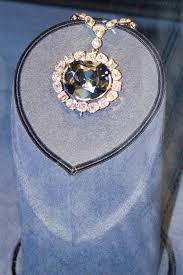
The Hope Diamond is set in Platinum

Despite these attractive platinum traveled a rocky road before it reached its present popularity.

Ancient Egyptians used platinum in jewelry and sarcophagi, but the metal virtually vanished from use until the early 1900s. Platinum wasn't used partially because of the challenges of working with it: it has to be heated to 3,827 degrees Fahrenheit - a temperature that was beyond the reach of medieval Europeans. Liquid platinum also hardens in a few seconds, so using it for casting was virtually impossible with early era technology.

Advances in technology in the 18th and 19th centuries enabled metalsmiths to generate the heat needed to melt platinum. In 1884, Peter Carl Faberge started using it to make his famous Easter Eggs, and a few decades later Louis Cartier began to make creations that adorned kinds and maharajahs.

Platinum disappeared a second time from jewelry during World War II - it was declared a strategic metal that was needed for the war effort - but it quickly regained its luster once the war ended. It was once again associated with style, elegance, and wealth."

-via GIA Education

Wednesday, July 10, 2013

Diamonds - What Do They Mean?

The Origin of the Word is Revealed


In the film, My Big Fat Greek Wedding, time and time again the father points out the fact that all words come from Greek origins. In the case of the diamond, it's true.

Diamond comes from the Greek word adamas, which translates to unbreakable.

Engagement rings are often set with a diamond, signifying and unbreakable bond between the couple.


Monday, July 1, 2013

Birthstone: Ruby

Tell Me a Little More

Targets: Redheads, July birthdays and those celebrating their 40th wedding anniversary

Features: Durable, basic color, was once the most prestigious gem

Feature Benefit: Can be used in any jewelry in any lifestyle; even in an active man's ring

Emotional Benefit: feeling of intelligence, aristocracy

-via InStore Magazine

Saturday, June 1, 2013

Gemstone Facts

Alexandrite: The Color Changer


"Alexandrite is one of the rarest gems on Earth. Named for it's discovery around the sixteenth birthday of Czar Alexander II, this color changing chrysoberyl can be beautiful in any light. Durability makes it an excellent engagement ring gem too. Also the gem for the 55th anniversary."

-via InStore Magazine, May 2013

Tuesday, December 11, 2012

Pantone Color of the Year 2013


It's here, it's here, it's finally here!  Pantone has selected their color of the year for 2013, drum roll please.....Emerald! Let everyone with a May birthday get excited as they might see quite a few more striking birthstone pieces this year!

In the jewelry business it is important to note a few characteristics of emeralds. Take a quick look at the information below to find out more.


  • First, they are not a strong enough stone to wear on a daily basis. This does not make the suitable for engagement rings.
  • Second, they are a beryl mineral, the same as aquamarines. Unlike aquamarines they crystallize closer to the Earth's surface and therefore have more fractures and scratches.
  • Third, the finest colors for emerald gemstones are green blue transparent stones with strong saturation. 
  • Fourth, emeralds of fine quality often times come from Columbia and countries in South America.
  • Fifth, the Emerald is the birthstone for May.

Click to view Pantone's Color of the Year