Wednesday, October 23, 2013

Jewelry News

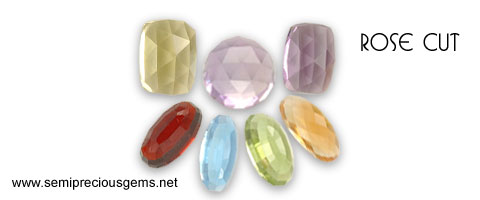
Jeweler's Rediscover Rose-Cut Gemstones


In a flashy, brilliant-cut age, designer Michelle On prefers the subtle beauty of the rose -cut stone. "I am really attracted by the special light-diffusing elegance inherent in rose-cut diamonds," she says. "They have a mesmerizing, soft brilliance. Imagine light pouring through the clearest of water."

-via InStore Magazine

Wednesday, October 9, 2013

Jewelry News

What is a Backlace?

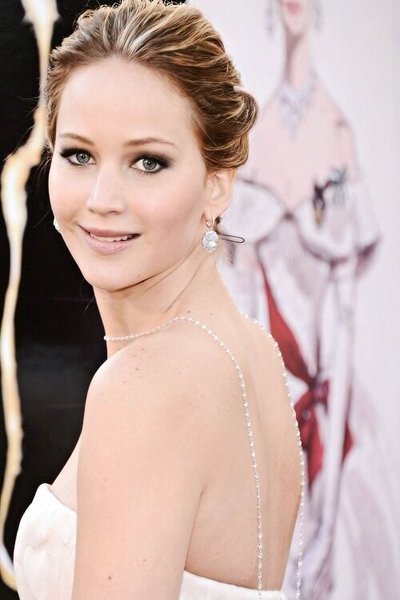
We've all heard of the necklace, but what is a backlace? Look no further than the red carpet! Celebrities are sporting a different style of jewelry. A necklace that drops in the back and not from the front of the neck. What do you think of the stars that have showcased this style?

Jennifer Lawrence

Jennifer Lawrence and Anne Hathaway, Oscars 2013

Claire Danes, Nicole Kidman, Jessica Biel all wearing a backlace


Wednesday, September 18, 2013

Jewelry News

1500-Year Old Ring May Have Royal Roots


"The $50,000 the Yorkshire Museum paid for a sapphire, gold and glass ring is turning out to be money well spent. Found by a local man with metal detector near the village of Esrick in 2009, the ring may have been made for the King of France, 1,500 years ago. "This sapphire ring is even more special than we had previously thought," says museum curator Natalie McCaul. A conference of global experts earlier this year made a few conclusions about the piece: The sapphire was probably cut during the Roman Era and the ring desgined around it. The wear on the rings suggests that it was worn for at least 50 years before it was lost. "Nothing like it has been found in this country," claims an exuberant McCaul."

-via InStore Magazine

Monday, September 2, 2013

Gemstone Facts

All About Emeralds with GIA

Pantone has named emerald their color of the year, which makes us jewelers even more excited to celebrate with the emerald stone all year long! The Gemological Institute of America tells us a bit more about the famous green gemstone. Take a peek!

"The first known emerald mines were in Egypt, dating from at least 330 B.C. into the 1700s. Cleopatra was known to have a passion for emerald, and used it in her royal adornments. 16th-century Conquistadors discovered South American mines hidden by the Incas. A ready and exceptional supply of emeralds was suddenly available, and Europeans fell in love with the bewitchingly beautiful gemstone.

Some 500 years later, emeralds are still enchanting us. Emerald is the birthstone for the month of MAy because its color symbolizes the rebirth and renewal that comes with spring. Pantone names it the Color of the Year for 2013 because of the "luxury and elegance (it brings) to the palette."

Emerald available for custom design at Measetique Jewels
Custom Emerald and Diamond Pendant

Emeralds are formed when the chromium, vanadium, and iron are present in the mineral beryl. The varying presence of these three elements gives emerald its range of color. Chromium and vanadium make an intense green color. Iron gives the stone a bluish tint.

The most valuable emeralds are bluish-green to green and have a medium to medium-dark tone. Since emeralds typically form in six-sided prisms, they are naturally suited for, and often shaped into, the emerald cut.


Most emeralds have inclusions (internal clarity characteristics) and blemishes (surface clarity characteristics) that can be seen with the unaided eye. The size and types of inclusions greatly affect price: from $10 per carat for a small low-quality stone, to $50,000 per carat for an exceptionally clean stone."

-via GIA Education

Wednesday, August 14, 2013

Jewelry Facts: Platinum

All About Platinum with GIA
Take a moment to learn a bit more about platinum with The Gemological Institute if America. You might be surprised with what you learn about this popular material.

"Jewelers often select platinum for heirloom pieces because it is extremely durable, doesn't tarnish, is malleable, and has heft (weight). The qualities mean that platinum can be turned into delicate shapes that stand untouched against the ravages of time.
The Hope Diamond is set in Platinum

Despite these attractive platinum traveled a rocky road before it reached its present popularity.

Ancient Egyptians used platinum in jewelry and sarcophagi, but the metal virtually vanished from use until the early 1900s. Platinum wasn't used partially because of the challenges of working with it: it has to be heated to 3,827 degrees Fahrenheit - a temperature that was beyond the reach of medieval Europeans. Liquid platinum also hardens in a few seconds, so using it for casting was virtually impossible with early era technology.

Advances in technology in the 18th and 19th centuries enabled metalsmiths to generate the heat needed to melt platinum. In 1884, Peter Carl Faberge started using it to make his famous Easter Eggs, and a few decades later Louis Cartier began to make creations that adorned kinds and maharajahs.

Platinum disappeared a second time from jewelry during World War II - it was declared a strategic metal that was needed for the war effort - but it quickly regained its luster once the war ended. It was once again associated with style, elegance, and wealth."

-via GIA Education

Thursday, August 1, 2013

Birthstones: Peridot

Cheat Sheet

If your sweetheart was born in August (the year doesn't matter!) wow her with a bit of knowledge on her birthstone, the peridot.

Targets: Green-eyed people, women between 22-43 years old (and anyone born in August!)

Product Features: Medium hardness, soothing color

Product Benefits: Adequate for ring use

Emotional Benefit: Feel different or special. The target market often thinks of themselves as iconoclasts or breakers with tradition.


-via InStore Magazine

Wednesday, July 24, 2013

Jewelry News: Diamonds

Diamonds Setting World Records


The Mouawad Group has set a Guinness World Record for the most valuable necklace, Guinness confirmed to National Jeweler on Friday (March 2013).

Mouawad's L'Incomparable diamond necklace is 18-karat gold with 637 carats of diamonds and is valued at $55 million, making it the most valuable--not expensive, Guinness said--necklace existing today.

THe piece features the 407.48 carat natural fancy-deep yellow "Incomparable" diamond, first made public in 1984. It is the largest flawless or internally flawless diamond ever graded by the Gemological Institute of America, GIA Director of Public Relations Stephen Morisseau said.

In addition the necklace has 35 round diamonds, 27 pear-shaped diamonds, nine heart-shaped diamonds, five emerald-cut diamonds, five cushion-cut diamonds, four oval-shaped diamonds, three Asscher-cut diamonds and two radiants.

The necklace set the Guinness World record on January 19. The necklace was unveiled atthe Doha Jewellery and Watch Exhibition, which too place February 25 to March 3 in the Middle Eastern state of Qatar.

-via The National Jeweler